
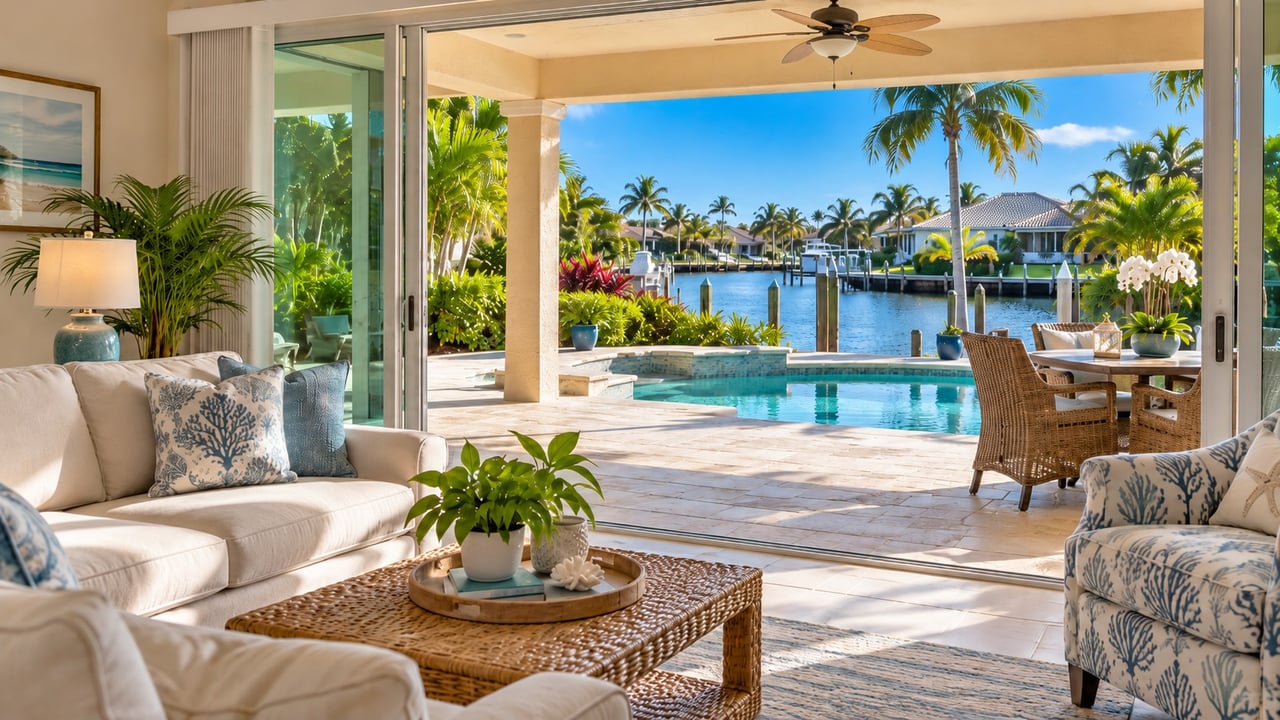
There comes a point in owning a second home when the question is no longer simply how much the property is worth, but how much value it continues to bring to your life. For many Marco Island homeowners, their residence represents years of winters spent along the Gulf, mornings overlooking the water, afternoons on the boat and the freedom of having a place to return to whenever the season calls. It is both a significant financial asset and a deeply personal investment, often associated with some of life's most memorable moments.
Yet as 2027 approaches, even longtime owners may find themselves reconsidering the balance between enjoyment, responsibility and opportunity. The ongoing cost of ownership, changes in how frequently a property is used, condominium obligations and the equity accumulated over time can make a thoughtful reassessment worthwhile. Selling is not necessarily the answer, nor is keeping a property simply because you have owned it for years. The most valuable decision begins with understanding what the home represents today, both financially and personally.
Marco Island remains a distinctive coastal real estate market, where beachfront condominiums, direct access waterfront estates, boating properties and private residences offer experiences that are difficult to replicate. But the value of living on the island and the financial wisdom of maintaining a particular property are two separate considerations. An extraordinary home can still require substantial annual investment, and a property that has appreciated significantly may represent an opportunity worth evaluating.
For Marco Island second home owners considering whether to keep or sell, Mark and Denise Zervos, Marco Island residents and founders of The Luxury Home Experts at Platinum Real Estate, offer a confidential, property specific review of current market value, competing properties and estimated selling proceeds. Call 239-264-1100 to begin the conversation. There is no obligation to list.
What Does It Really Cost to Own a Second Home on Marco Island?
The true cost of a second home extends well beyond the purchase price, and for owners who divide their time between Southwest Florida and another residence, those expenses can be easy to overlook. Property taxes, homeowners insurance, flood coverage when applicable, utilities, landscaping, pool maintenance, condominium or homeowners association fees and routine property care continue whether the residence is occupied or not. Waterfront ownership may bring additional responsibilities involving seawalls, docks, boat lifts and marine improvements, while larger residences may require ongoing attention to extensive outdoor areas, mechanical systems and storm-protection features.
Some of these costs are predictable. Others arrive unexpectedly, often in the form of a substantial repair, equipment replacement or improvement that becomes necessary simply to preserve the property's condition and value. Roofs, air-conditioning systems, exterior finishes, pool equipment and other components have useful lives that eventually require financial attention. Insurance coverage and deductibles warrant individual review, particularly in coastal locations, where the terms of a policy can be as consequential as the premium itself. Florida's Department of Financial Services provides consumer resources concerning insurance coverage and related considerations.
For owners who live elsewhere much of the year, the responsibility can extend beyond expense. Someone must oversee the property, coordinate maintenance, monitor conditions during storm season and respond when something requires attention. Even with reliable local service providers, managing a second residence involves time and decision making that may no longer align with an owner's priorities.
Consider the broader ownership equation. If a Marco Island home is enjoyed for six or eight weeks annually, what is the full cost of maintaining it for the other months? How much capital remains committed to the property, and how might that capital serve your financial objectives if it were no longer tied to the real estate? Conversely, what would it cost to replicate the same level of comfort, location and convenience through seasonal rentals or another ownership arrangement?
The purpose of asking these questions is not to suggest that a beloved property has become a financial burden. Rather, it is to distinguish the emotional value of ownership from its economic reality. For some homeowners, the pleasure and security of maintaining a permanent place on Marco Island justify the commitment. For others, a closer examination reveals that their needs and circumstances have evolved.
An informed decision begins by considering the entire cost of ownership, the enjoyment the property provides and the alternatives available.
Should Marco Island Condo Owners Be Concerned About Fees, Reserves and Special Assessments?
Condominium ownership presents a particularly interesting decision for seasonal residents. The appeal is undeniable: exceptional Gulf views, desirable amenities, convenient access to the beach and freedom from many of the maintenance responsibilities associated with a single family home. For an owner who wishes to arrive, enjoy the island and depart without managing extensive exterior upkeep, a well maintained condominium can remain an appealing choice.
Nevertheless, condominium ownership involves participation in the financial obligations of the entire building or community. Association fees, insurance, capital projects, reserve contributions and possible special assessments can influence both the cost of continuing ownership and the property's position in the resale market.
Florida's condominium inspection and reserve requirements have brought greater attention to long-term building maintenance and the funds available to address it. Depending on a building's characteristics, milestone inspections and structural integrity reserve studies may apply. The Florida Department of Business and Professional Regulation explains these requirements and their purpose in evaluating building conditions and planning for significant future expenses.
Not every condominium faces the same circumstances, and it would be inaccurate to assume that all Marco Island buildings are experiencing identical financial pressures. A well managed association with appropriate planning and clear financial documentation may offer a very different ownership outlook from a building confronting unresolved projects or uncertain capital requirements.
For owners questioning whether to keep their condominium, a thoughtful review should consider the association's budget, reserve information, anticipated improvements, known assessments and ongoing insurance obligations. Those same details can become important during a future sale because prospective buyers increasingly evaluate not only the residence they are purchasing, but also the financial and physical condition of the building.
This is one reason condominium values cannot be determined by Gulf views, interior finishes and square footage alone. Two residences offering similar accommodations may attract different levels of buyer interest because of their associations, financial obligations, building conditions and amenities.
Our guide to Selling a Marco Island Condo in 2026: Assessments, Reserves, Milestone Inspections and What Sellers Need to Know examines these issues from a seller's perspective. For owners who are considering a change, understanding the building's current financial position is an essential part of determining both the wisdom of continued ownership and the strategy for a possible sale.
What Is Your Marco Island Home Worth Today, and What Would You Actually Net If You Sold?
For many second home owners, the decision to consider selling begins with a simple realization: the property's value may be substantially different from what it was when they purchased it. Some have owned their Marco Island residences for decades, while others purchased more recently and have invested significantly in renovations, furnishings, outdoor living spaces or waterfront improvements.
But understanding what a property may be worth today requires more than reviewing its original purchase price, an automated estimate or the latest island-wide median sale price.
Marco Island is an unusually property specific market. Waterfront homes differ according to boating access, canal characteristics, bridge restrictions, water depth, exposure, dockage and seawall condition. Beachfront condominiums compete according to building location, elevation, views, floor plans, amenities, financial considerations and renovation quality. Inland residences may offer attractive alternatives through privacy, generous living areas and convenient access to the island's amenities.
These distinctions influence the buyers a property attracts and the alternatives those buyers are likely to consider.
Our September 2026 Marco Island Market Intelligence Report documented 68 residential closings representing approximately $92.66 million in sales volume, including 28 single-family homes and 40 condominiums. The median single-family sale price was $1.45 million, while the condominium median was $599,500. Those figures provide valuable context, but they do not establish the value of an individual property. The mix of homes closing in any particular month can shift market medians substantially, even when the characteristics of a specific residence have not changed.
The more meaningful question is how your property compares with the homes that prospective buyers are evaluating right now. A direct access waterfront estate should not be priced by averaging every waterfront transaction on the island, just as a Gulf-front luxury condominium should not be assessed against every condominium sale. Proper valuation considers the specific property, competing inventory, recent comparable transactions, condition, improvements and buyer expectations.
We explore this distinction in What Is My Marco Island Home Worth?, where the emphasis is on evaluating the property itself rather than relying on broad online estimates.
Yet market value is only half the financial discussion. For an owner considering whether to keep or sell, the more revealing question is often what the property would actually net after a successful sale.
The final amount received at closing may be affected by outstanding financing, negotiated real estate compensation, Florida documentary stamp taxes, closing expenses, property-tax prorations, association-related obligations and other contractual adjustments. A preliminary seller net-proceeds analysis can help establish a realistic range before an owner makes a decision.
Our article, How Much Will I Net If I Sell My Marco Island Home in 2026?, examines these considerations in greater detail.
Taxes may also play an important role. The federal capital gain exclusion associated with selling a principal residence does not automatically apply to a vacation home or second residence. The Internal Revenue Service explains the principal-residence ownership and use requirements, and owners should consult a qualified tax adviser regarding their individual circumstances, adjusted basis and possible tax consequences. Estimated closing proceeds and after-tax financial results are not necessarily the same.
For a homeowner weighing the future of a significant real estate asset, understanding both the property's probable market value and its potential net proceeds creates a far more useful foundation for decision-making than asking prices or online estimates alone.
Would Renting, Downsizing or Selling Offer Greater Flexibility?
There are circumstances in which an owner still loves Marco Island but no longer needs the same property or ownership arrangement. A home purchased for extended winter stays may now be used for occasional visits. A waterfront estate that once accommodated frequent guests and boating excursions may involve more upkeep than the owner wishes to maintain. A condominium that originally represented effortless seasonal living may carry different financial responsibilities than anticipated.
The alternatives are not limited to keeping the property indefinitely or selling and never returning.
Some homeowners consider renting their residence when it is not being used. Others explore purchasing a smaller or lower-maintenance property on the island, preserving their connection to Marco Island while changing the scale of their investment. Still others decide that renting accommodations during their visits provides the lifestyle they enjoy without the responsibilities of year round ownership.
Renting an existing home can be attractive, but the potential income should be assessed carefully. Condominium documents, association rules, deed restrictions and local regulations may limit rental frequency or minimum lease periods. Property management, vacancy, insurance, maintenance, cleaning and applicable taxes can materially affect the financial outcome. Gross rental revenue should never be confused with net income, particularly when an owner expects to retain use of the property during desirable seasonal periods.
Downsizing also requires a realistic comparison. A smaller residence may reduce certain ownership responsibilities, but condominium fees, insurance, location, amenities and transaction costs must be considered alongside the prospective purchase price. The objective should be to select an arrangement that provides genuine benefits, not merely a smaller property.
For owners living in Canada, Ohio, Michigan, Illinois, New York or elsewhere, another consideration is the ease of managing a sale from a distance. Many parts of the selling process can be coordinated without the owner remaining on Marco Island throughout the transaction. Preparing the property, arranging photography, coordinating access, communicating with service providers and overseeing transaction details can often be managed locally with experienced representation and appropriate professionals.
Our guide, How to Sell a Marco Island Home From Out of State, explains how seasonal owners can begin preparing for a sale even when they are hundreds or thousands of miles away.
These possibilities reinforce an important distinction: deciding whether to keep a particular residence is not the same as deciding whether Marco Island should remain part of your life. You may still love the destination while concluding that a different real estate arrangement better reflects your priorities.
Is 2027 the Right Time to Sell Your Marco Island Second Home?
Timing matters in real estate, but it is rarely as simple as identifying a particular season or predicting the next movement in market prices. Marco Island has a distinctive seasonal rhythm, with winter visitors, second-home purchasers and returning residents contributing to buyer activity. Nevertheless, the ideal time to offer a property depends on far more than the calendar.
A waterfront residence with unusual boating advantages may appeal to a highly specific audience. A beautifully maintained beachfront condominium may compete with other residences in the same building or neighboring developments. A home requiring significant updates may benefit from a different pricing and preparation strategy than one that has recently undergone extensive renovations.
Buyer demand, available inventory, property condition and the owner's financial objectives should all inform the decision. A homeowner with substantial equity and a desire to simplify ownership may approach timing differently from someone who intends to continue enjoying the property for several more seasons.
The question should not simply be whether Marco Island prices will rise or fall in 2027. No responsible adviser can promise that outcome. The more productive question is whether selling under current conditions would advance your financial and personal goals, and whether waiting offers an identifiable advantage that outweighs the additional ownership commitments.
For an owner already considering a sale, this is a useful time to examine what buyers are purchasing, how competing properties are positioned and what preparation may be worthwhile. Our article, Selling Your Marco Island Home Before the Winter Season: What Owners Should Be Doing Now, explores how thoughtful planning can help position a property for the seasonal market.
The decision should remain individual. Keeping a home may be entirely appropriate when it continues to provide meaningful enjoyment and fits comfortably within an owner's long-term plans. Selling may be equally appropriate when the equity, responsibilities and alternatives point toward a different opportunity.
What matters is making that choice with accurate information rather than assumptions about the market or the passage of another year.
Before You Decide, Understand What Your Property Represents Today
For homeowners with a meaningful investment in Marco Island real estate, a keep or sell decision deserves more than an automated home valuation or a general conversation about whether the market is strong. It requires an understanding of the property's particular attributes, its competitive position, likely selling expenses and the opportunities associated with retaining or releasing the investment.
Mark and Denise Zervos, founders of The Luxury Home Experts at Platinum Real Estate, bring the perspective of Marco Island residents and decades of real estate experience to these conversations. Their combined career transaction closings exceed $1 billion, including representation across traditional residences, waterfront homes, condominiums and distinguished luxury properties. Their experience includes a notable Port Royal transaction exceeding $26 million, but their approach to property evaluation remains centered on the individual homeowner and the circumstances of each property.
For owners contemplating a change before 2027, Mark and Denise offer a confidential, property-specific Marco Island Keep-or-Sell Review. This conversation can include an assessment of current market value, a comparison with relevant competing properties, an estimate of likely selling proceeds and a discussion of how timing, preparation and existing market conditions may influence the result.
The purpose is not to persuade every second home owner to sell. It is to provide a thoughtful basis for deciding whether continued ownership still serves their interests. For some, that analysis will reinforce the decision to keep and enjoy the property. For others, it may reveal an opportunity to simplify, reposition assets or pursue a different lifestyle with greater flexibility.
A home on Marco Island can hold extraordinary personal and financial value. Knowing when to preserve that investment and when to consider a new direction is part of thoughtful ownership.
If you've begun questioning whether it makes sense to keep your Marco Island second home, the conversation can begin long before you're ready to list. Understanding your property's current value and what a sale could realistically mean is the first step toward making a confident, informed decision.
REQUEST YOUR CONFIDENTIAL MARCO ISLAND KEEP-OR-SELL PROPERTY REVIEW
Mark & Denise Zervos
The Luxury Home Experts | Platinum Real Estate
239-264-1100 | 216-990-2100
Global Reach. Local Roots.