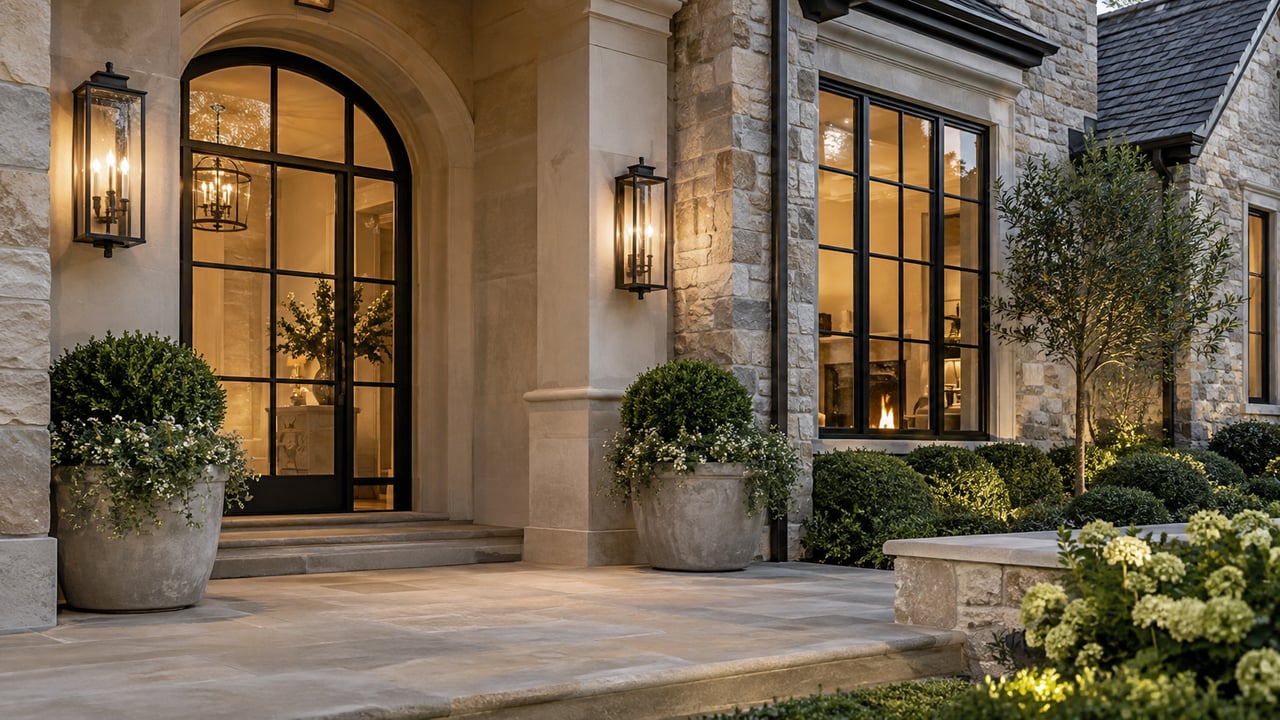
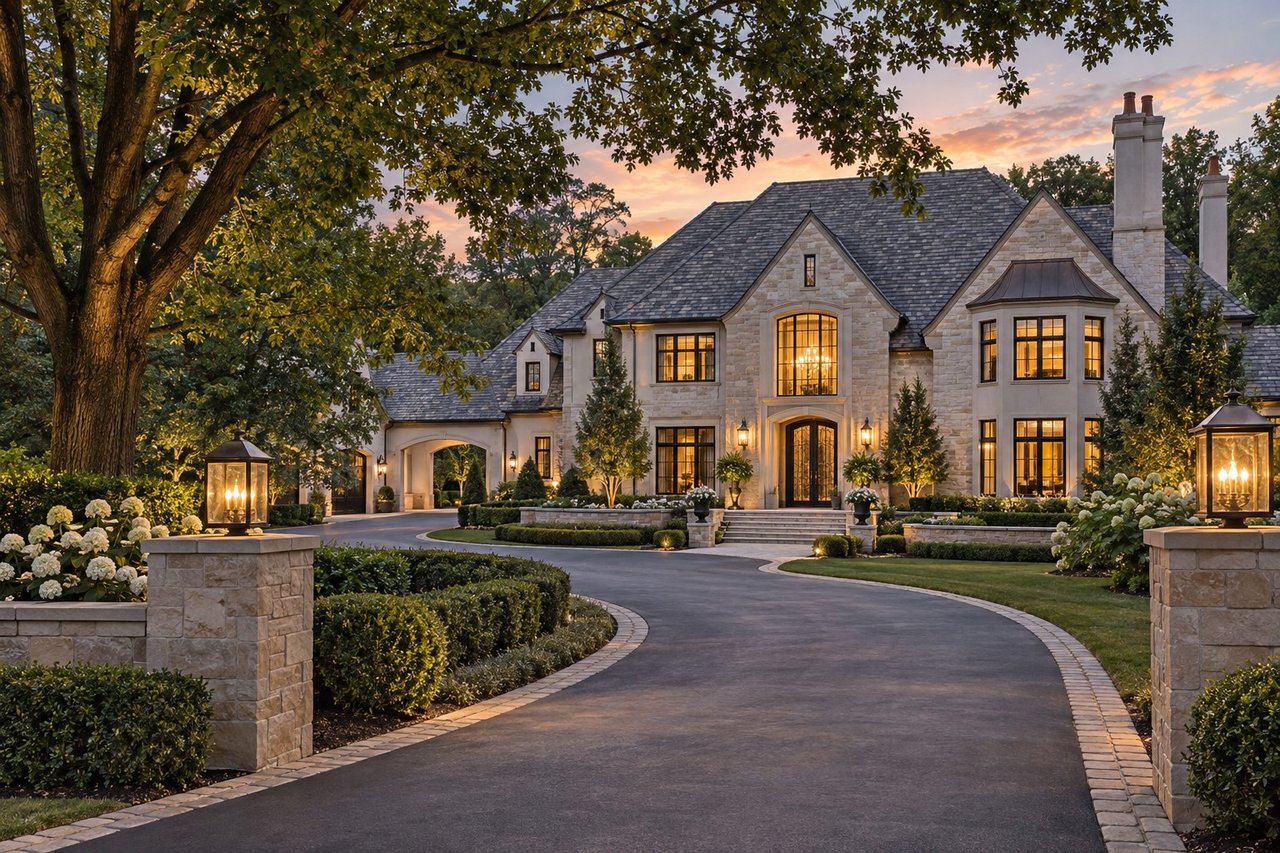
When a conventional home sells quickly and a multimillion-dollar estate remains available for several months, it can be tempting to assume something is wrong. In luxury real estate, however, that conclusion can be far too simplistic.
A distinctive property in Hunting Valley, Gates Mills, Pepper Pike, Waite Hill, Kirtland Hills, Bratenahl, Moreland Hills or another Greater Cleveland luxury market is not competing with every home in Northeast Ohio. It may be waiting for a remarkably small group of buyers who want that particular combination of location, architecture, acreage, privacy, condition, amenities and price.
Mark and Denise Zervos, co-owners of Platinum Real Estate and founders of The Luxury Home Experts, have spent decades representing buyers and sellers throughout Northeast Ohio. Our experience with luxury, waterfront, acreage and other distinctive properties has reinforced an important reality: market time at the upper end cannot always be interpreted the same way it is in a more conventional price range.
A longer marketing period does not automatically mean a luxury property is overpriced, poorly marketed or incorrectly positioned. Sometimes it simply reflects the mathematics of a narrower buyer pool and a property that cannot easily be compared with anything else currently available.
For homeowners exploring the broader regional market, our Ohio Luxury Home Experts page provides additional Greater Cleveland and Northeast Ohio market information.
Why Does a Luxury Home Sometimes Take Longer to Sell?
Luxury real estate is ultimately a matching process. At a more common price point, a much larger number of households may be financially capable of purchasing a property. As the price rises, the qualified buyer pool naturally becomes smaller, and the individual characteristics of the home narrow that audience even further.
A buyer seeking ten acres and exceptional privacy may not want a traditional subdivision. Someone looking for newer construction may not consider an architecturally significant older estate. Another buyer may specifically require a first-floor primary suite, substantial garage capacity, a pool, guest accommodations, equestrian potential, a private office environment or enough land to create a compound.
The higher and more specialized the property becomes, the fewer people may be searching for that exact combination at exactly the same moment. That does not necessarily diminish the property's value. It may simply mean that finding the right buyer requires patience, sustained exposure and a marketing strategy capable of reaching beyond the immediate neighborhood.
Distinctive Homes Are Harder to Compare
One of the challenges in Greater Cleveland luxury real estate is that many of the most desirable properties are not interchangeable.
A custom estate on several acres in Hunting Valley may have little in common with a renovated residence in Pepper Pike, even if the asking prices appear similar. A Lake Erie residence in Bratenahl presents a completely different lifestyle from an acreage property in Waite Hill. Properties in Kirtland Hills, Gates Mills and Moreland Hills can derive substantial value from land, architecture, privacy and setting in ways that simple square footage comparisons do not capture.
That is why broad price-per-square-foot calculations can become particularly misleading at the luxury level. Buyers may be purchasing privacy, land, architectural character, construction quality, recreational amenities, additional parcels or a lifestyle that would be extraordinarily difficult or expensive to reproduce.
The most useful comparable sale is therefore not always the closest property geographically. The more important question is whether the same buyer who seriously considered that property would realistically consider yours.
For more on this property specific approach, our guide on How to Choose the Best Luxury Real Estate Agent in Cuyahoga County, Ohio explains why distinctive homes require a different pricing, presentation and marketing analysis.
A Smaller Buyer Pool Changes the Meaning of Days on Market
Days on market is useful information, but it needs context. For a broadly appealing home in a heavily searched price range, extended market time may sometimes indicate that buyers are finding stronger alternatives.
At the luxury level, however, market time can also reflect scarcity on the buyer side rather than a problem with the property.
Consider an estate with substantial acreage, extensive finished living space, a pool, separate recreational amenities and additional land. There may be very few genuinely comparable properties available, but there may also be very few buyers who simultaneously want that specific location, acreage, scale, amenities and price point.
The transaction requires those two sides of the market to find one another. That can happen quickly, or it can require months of sustained exposure. Neither outcome, standing alone, tells the full story.
Our Luxury Homes Near Hunting Valley, Ohio article provides another look at why acreage, privacy, additional parcels and specialized amenities can make a luxury property difficult to compare using conventional metrics.
What Should a Luxury Seller Watch Besides Days on Market?
A sophisticated seller should look at the quality of the market response rather than focusing on one number.
The important questions are whether qualified buyers are seeing the property, whether the right agents know about it, whether digital marketing is reaching affluent consumers inside and outside Northeast Ohio, and whether serious prospects are engaging with the listing and scheduling private showings.
Buyer and agent feedback also matters. So do changes in competing inventory, relevant properties going under contract, new closed sales and broader shifts in the financial environment.
Taken together, those signals provide considerably more information than simply counting days.
A luxury property that has been exposed correctly and continues to generate meaningful engagement may simply require patience. A property receiving very little qualified activity may warrant a deeper strategic review. Those are two very different situations, and experienced luxury representation should recognize the difference.
Does a Longer Marketing Period Mean the Price Is Wrong?
Not necessarily.
Price is certainly one component of buyer behavior, but market time alone does not prove that a luxury home's asking price is incorrect. A property may be reasonably positioned yet require more time because its ideal buyer is uncommon.
Conversely, a home may receive substantial exposure but encounter resistance because buyers perceive a gap between the asking price and competing alternatives. That is why pricing decisions should be based on what the market is actually communicating rather than an arbitrary number of days.
Instead of asking only whether the home has “been listed too long,” a seller should consider what has happened during that time. Which qualified buyers have engaged? What feedback has repeated? Which competing properties have entered or left the market? What has sold? Has anything materially changed since the original strategy was established?
Luxury pricing should remain thoughtful and evidence based rather than reactionary.
A Price Adjustment Does Not Automatically Mean the Original Strategy Was Wrong
Markets change. Competing inventory changes. Interest rates and buyer urgency change. A new comparable sale can provide information that simply did not exist when a property first entered the market.
Sometimes adjusting a price does more than change the number. It may place a property into a different buyer search range, create renewed visibility and alter how the home compares with current alternatives.
That does not automatically mean an earlier pricing strategy was unreasonable. It means an effective luxury strategy should remain responsive to new information.
This distinction is especially important with one-of-a-kind properties because there may be very few truly relevant sales available when the original pricing decision is made.
The Right Buyer May Not Already Live in Greater Cleveland
Another reason luxury properties can require more time is geography.
The buyer for a Greater Cleveland estate may currently live in Chicago, New York, Florida, California or another part of Ohio. They may be relocating for business, moving closer to family, returning to Northeast Ohio or discovering that their purchasing power can provide considerably more land, privacy and amenities here than in another luxury market.
That is why high end marketing should reach beyond the immediate ZIP code. The property's story needs to communicate not only what the house contains, but why someone would choose this property and this part of Northeast Ohio over other alternatives.
For an acreage estate, that story may center on privacy and land. For a waterfront residence, it may be the relationship to Lake Erie. For another property, the defining elements may be architecture, private-school access, recreational amenities, first-floor living, outbuildings or the ability to create a private compound.
Luxury buyers frequently purchase differences, not averages.
Greater Cleveland Is Not One Luxury Market
The term “Greater Cleveland luxury real estate” encompasses many very different submarkets.
Hunting Valley and Gates Mills are associated with significant estates, acreage and privacy. Pepper Pike offers established luxury neighborhoods and substantial properties with convenient access to the eastern suburbs. Waite Hill and Kirtland Hills can offer larger parcels and highly distinctive residences, while Bratenahl offers a Lake Erie setting that cannot be replicated inland.
Even within one community, two homes at similar price points can appeal to very different buyers. That is why sellers should be cautious about broad statements suggesting that all luxury homes in Greater Cleveland should sell within the same number of days.
Averages provide context. They do not replace individual property analysis.
Our Pepper Pike Market Intelligence series is one example of why examining the actual properties behind the averages can be far more useful than relying on one broad market statistic.
Presentation Matters More When the Buyer Pool Is Small
When fewer buyers are available, every interaction with the property becomes more important.
Professional photography, video, property storytelling, digital presentation, floor plans, targeted advertising, agent-to-agent exposure and accurate property information all matter because the right buyer may encounter the home only once before deciding whether to investigate further.
The objective is not merely to make the property look attractive. It is to make its value understandable.
Why does the acreage matter? What would it cost to reproduce the outdoor amenities? Why is an additional parcel important? How does the layout support the lifestyle of the likely buyer? Which improvements are meaningful rather than merely cosmetic? What does this property offer that a buyer cannot easily recreate elsewhere?
Strong luxury marketing answers those questions before the buyer has to ask them.
When Should a Luxury Seller Reevaluate the Strategy?
The fact that luxury properties can require patience does not mean the marketing plan should remain static.
A thoughtful strategy should be reviewed periodically using real market evidence. New competing listings, relevant closed sales, showing activity, digital engagement, buyer feedback and broader market conditions should all be considered.
Sometimes the correct decision is to stay the course. Sometimes photography, messaging, advertising or buyer targeting should evolve. In other cases, the market may provide evidence supporting a pricing adjustment.
The key is that any change should have a reason behind it. Luxury strategy should be deliberate rather than reactive.
What Sellers Should Know About Price Per Square Foot
Price per square foot is one of the easiest real estate statistics to calculate and one of the easiest to misuse with distinctive properties.
Consider two residences of identical size. One may have several additional acres, a pool, extensive landscaping, renovated interiors, additional structures and superior privacy. The other may have a smaller lot but newer construction and a more contemporary floor plan.
A single price-per-square-foot number cannot fully explain which property a particular buyer will value more.
Luxury buyers evaluate the entire offering. Land, architecture, renovation quality, construction cost, recreational amenities, condition, location and the difficulty of reproducing the property should all be considered alongside basic square footage.
The Real Question Is Whether the Strategy Still Makes Sense
For luxury sellers, this is the distinction that matters most.
The goal is not necessarily to make a distinctive property sell as quickly as possible. The goal is to produce the strongest reasonable outcome while protecting the property's value and the seller's objectives.
Sometimes speed and value align. Sometimes reaching the right buyer requires more patience.
A sophisticated seller should therefore evaluate whether the property is being presented at the level it deserves, whether it is reaching the right audience, whether its value proposition is clear, whether the pricing remains supported by the relevant market and whether the strategy is responding intelligently to buyer behavior.
Those questions are far more useful than judging a distinctive luxury property by days on market alone.
Experience Matters With Properties That Do Not Fit an Algorithm
Mark and Denise Zervos and The Luxury Home Experts at Platinum Real Estate have represented luxury, waterfront, acreage and other distinctive properties throughout Northeast Ohio. Our approach begins with understanding what makes an individual property difficult to replace and identifying the buyer most likely to recognize that value.
That experience matters because a highly customized property should not automatically be evaluated against the closest house that happened to sell. It requires a deeper look at land, architecture, amenities, location, condition, competitive inventory and buyer behavior.
For examples of properties represented across Northeast Ohio and other markets, visit our Notable Sales collection.
Considering Selling a Luxury Home in Greater Cleveland?
Whether you are considering selling now, planning a future move or simply trying to understand where your property fits in today's market, the first step should be a property specific evaluation.
A meaningful review should consider the residence, land, condition, improvements, current competition, relevant sales and the type of buyer most likely to value the property. It should also help you understand not simply an estimated value, but how the home might need to be positioned if you ultimately decide to sell.
REQUEST A CONFIDENTIAL LUXURY PROPERTY EVALUATION
You do not need to decide today whether you are ready to sell. The first step is understanding the property, the market and your options.
Mark & Denise Zervos
The Luxury Home Experts | Platinum Real Estate
216-990-2100 • 239-264-1100
Global Reach. Local Roots.
Greater Cleveland Luxury Seller FAQ
Is it normal for a luxury home to take longer to sell?
It can be. Higher price points generally have fewer financially qualified buyers, and distinctive luxury properties may appeal to an even narrower audience based on location, acreage, architecture, amenities and lifestyle. Market time should therefore be evaluated alongside qualified buyer activity, competing inventory and the individual characteristics of the property.
Does a long time on market mean a luxury home is overpriced?
Not automatically. Pricing is one factor, but a smaller buyer pool, unusual property characteristics, timing and changes in competing inventory can also extend a property's marketing period. The more useful question is whether the asking price remains supported by current market evidence and buyer response.
How long should it take to sell a luxury home in Greater Cleveland?
There is no single number that applies to every Greater Cleveland luxury property. A renovated Pepper Pike residence, a Hunting Valley estate, a Gates Mills acreage property, a Bratenahl waterfront home and a Waite Hill estate may attract completely different buyers and experience very different marketing periods.
Should I reduce the price if my luxury home has not sold?
Not solely because a particular number of days has passed. Before making a pricing decision, sellers should evaluate qualified showing activity, buyer feedback, new competition, recent relevant sales and changes in the broader market. Any adjustment should be strategic rather than automatic.
Why are luxury homes harder to compare?
The characteristics that create value at the luxury level are often highly property specific. Acreage, privacy, architecture, construction quality, views, pools, outbuildings, additional parcels, renovations and specialized amenities can materially influence buyer perception and the difficulty of replacing the property.
Does price per square foot accurately value a Cleveland luxury home?
It can provide one reference point, but it should not be used by itself. Luxury buyers purchase the entire property, including the land, condition, architecture, amenities, location, lifestyle and replacement difficulty.
Where are Greater Cleveland's luxury home markets?
Luxury and distinctive properties can be found throughout Northeast Ohio, including Hunting Valley, Gates Mills, Pepper Pike, Moreland Hills, Waite Hill, Kirtland Hills, Bratenahl and other eastern and western Greater Cleveland communities.
How do I know what my Greater Cleveland luxury property is worth?
Start with a property specific evaluation that considers relevant recent sales, current competition, land, condition, improvements, amenities and the likely buyer pool. For distinctive properties, selecting genuinely comparable homes is particularly important.