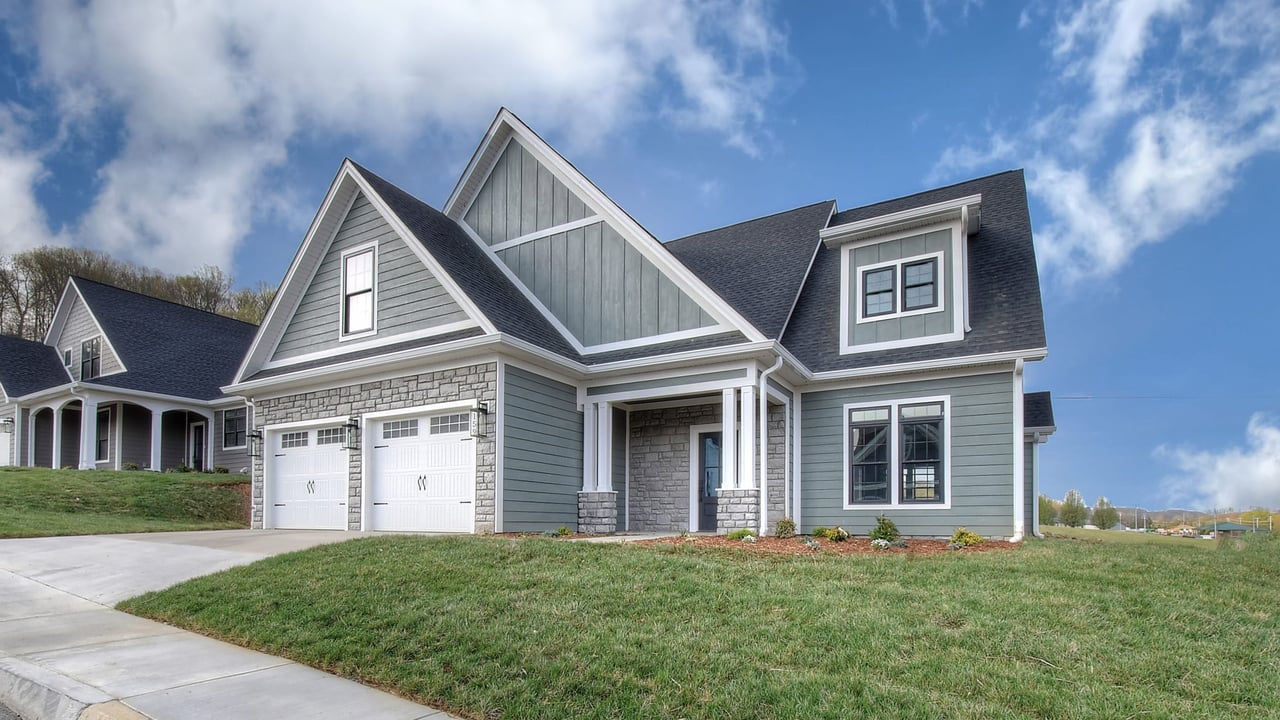
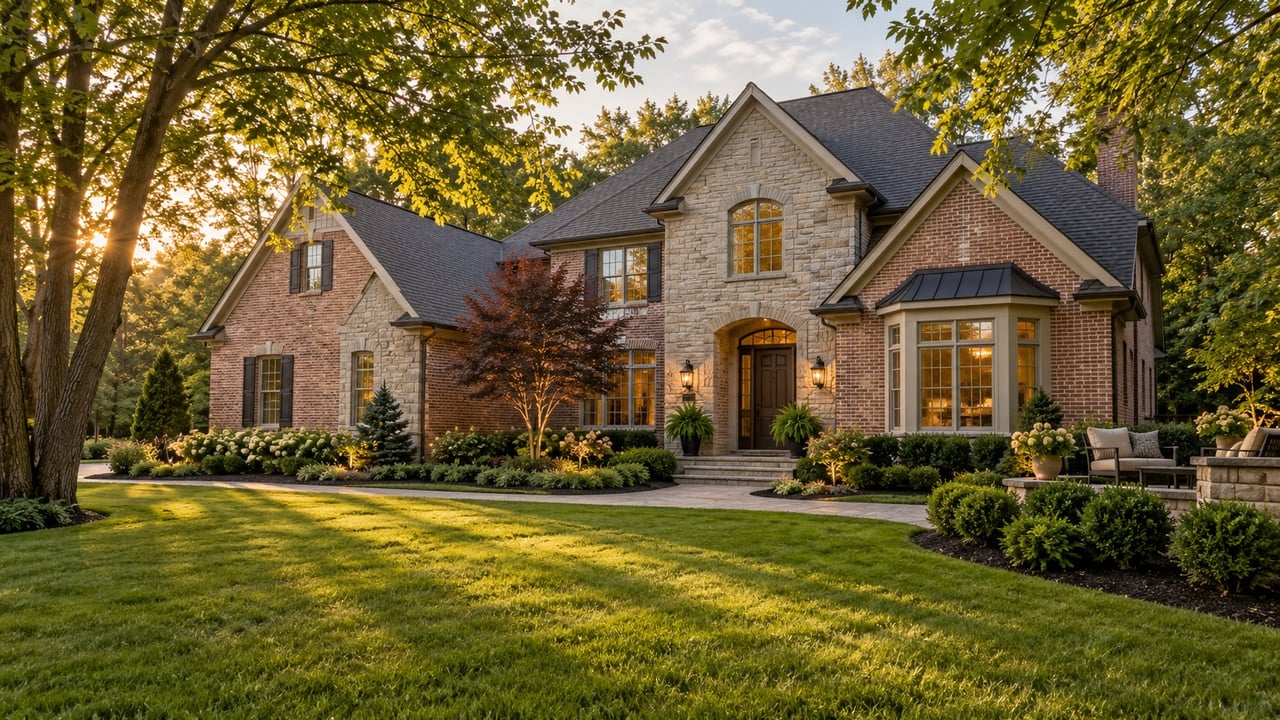
If you own a home in Mentor, Ohio, you can find an estimated value online in seconds. The harder question is whether that number actually reflects what a buyer would pay for your specific property today. Mentor is not one interchangeable housing market. Established neighborhoods, newer construction, lake-area properties, condominiums, homes with larger lots, extensively renovated residences and properties with specialized features can attract different buyers and produce very different results.
Two homes with similar square footage can sell at noticeably different prices because buyers are evaluating far more than size. For a homeowner considering a sale, the most useful question is not simply, “What is the average Mentor home worth?” It is: Which recent sales actually compete with my home, what are buyers paying for those properties, and how does my home compare with what is available today?
Local Mentor & Lake County Real Estate Guidance
Denise and Mark Zervos, co-owners of Platinum Real Estate and founders of The Luxury Home Experts, have longstanding roots in Northeast Ohio and more than three decades of real estate experience. Their approach to Mentor home values begins with the individual property rather than a citywide average or automated estimate.
A home near Lake Erie or the Mentor Lagoons may have a very different value proposition from a property in an established subdivision, newer development or larger-lot setting. Condition, major improvements, lot characteristics, outdoor living, garage space, first-floor living and the quality of competing inventory can all influence how buyers respond. For sellers, the objective is to identify the properties buyers are most likely to compare with yours and understand why one home commanded more than another.
Global reach. Local roots.
What Determines the Value of a Mentor, Ohio Home?
A home's value begins with comparable sales, but choosing the right comparables requires judgment. Location within Mentor matters, as do lot size, condition, renovation quality, functional layout, major systems, garage and storage space, outdoor living and the amount of usable finished space.
Buyers may also place additional value on characteristics that are difficult or expensive to add later. A larger lot, private setting, first-floor primary suite, substantial garage space, pool, updated major mechanical systems or a particularly well-renovated interior may separate one property from another even when their basic statistics appear similar. Value is therefore rarely determined by one feature. It is the combination of property, location, condition and competition that creates the buyer's perception of value.
The Closest Sale Is Not Always the Best Comparable
One of the most common mistakes in estimating a home's value is assuming the closest recent sale must be the most relevant. Geography matters, but buyer behavior matters more.
Imagine two Mentor homes with approximately the same square footage. One has been extensively renovated, offers strong outdoor living and sits on a larger private lot. The other needs significant updating and offers fewer amenities. Even if they are located nearby, buyers may not view them as equivalent choices.
The strongest comparable is often the property that competed for the same buyer, not simply the property located closest to yours. That distinction becomes especially important for distinctive homes where there may be very few truly comparable transactions.
Why Price Per Square Foot Can Be Misleading
Price per square foot can be useful as one reference point, but it should not be used as a simple formula. A beautifully renovated home with a younger roof, updated mechanicals, desirable outdoor living and a strong lot may command substantially more per square foot than an older property requiring significant work.
Conversely, a very large home may sometimes sell for a lower price per square foot simply because buyers do not value every additional square foot equally. Finished basement space, above-grade living area, garage capacity, land and specialized improvements also do not necessarily carry the same value per square foot.
For Mentor sellers, price per square foot should therefore be one piece of the analysis, not the analysis itself.
How Much Do Renovations Increase a Mentor Home's Value?
Improvements can influence value, but homeowners should be cautious about assuming every dollar spent on a renovation will be returned at closing. Buyers generally respond to the overall result. A well-designed kitchen renovation may substantially improve a home's appeal, but so can a newer roof, windows, HVAC system, waterproofing, updated electrical work or documented drainage improvements because those items reduce uncertainty about future ownership costs.
The quality and consistency of renovations also matter. Buyers tend to respond better when updates feel cohesive rather than when one portion of the property has been dramatically improved while the rest feels neglected. Before completing a major renovation solely to prepare for sale, determine whether buyers in the home's likely price range will reward the improvement enough to justify the cost and time involved.
Does My Mentor Neighborhood Affect My Home's Value?
Yes, but neighborhood is only part of the equation. Mentor contains a wide range of housing environments. Properties in established neighborhoods such as Deer Ridge, Living Homes or French Hollow may compete differently from homes in newer areas such as Lakeshore Highlands or properties closer to Mentor's lakefront and recreational areas. Newell Creek, Primavera and other neighborhoods may also attract buyers looking for different combinations of age, setting, architecture and amenities.
The objective is not to declare one area better than another. It is to understand which properties buyers consider reasonable alternatives to yours. That buyer comparison is what helps define the correct competitive set.
Do Larger Lots, Pools and Outdoor Living Add Value?
They can, particularly when they are difficult or expensive for a buyer to recreate. A larger usable lot, mature landscaping, privacy, attractive patio or deck, pool and thoughtfully designed outdoor living space may distinguish a property from more conventional inventory.
Condition still matters. A neglected pool or outdoor improvement that appears likely to require substantial expense can create a very different buyer response. The question is not simply whether the home has an amenity. It is whether that amenity strengthens the overall value proposition for the buyer most likely to purchase the home.
Does First-Floor Living Matter?
Functional layout can have a meaningful effect on buyer demand. A first-floor primary suite, first-floor laundry or the ability to conduct most daily living on one level can expand the group of buyers who consider a property. Conversely, an unusual layout may require more intentional marketing so buyers understand how the home can function for them.
This is another reason two Mentor homes with the same bedroom count and square footage may not sell for the same amount. Buyers purchase a living experience, not simply statistics.
How Does Current Competition Affect My Home's Value?
Closed sales tell us what buyers were willing to pay in the recent past. Active listings tell us what buyers can choose instead of your home right now. Both matter.
A seller may find strong historical support for a price, yet still struggle if several competing homes enter the market offering more compelling renovations, larger lots, better condition or more aggressive pricing. Conversely, limited competing inventory can improve a property's position when it offers something buyers are having difficulty finding elsewhere.
A strong pricing analysis should therefore examine recent sales and current competition before recommending a list price.
What If My Mentor Home Is Unique?
Some of the most difficult properties to value are also the ones that require the greatest expertise. A larger custom residence, unusual architectural property, home with acreage, extensive garage space, pool, significant finished living area or specialized improvements may have few obvious comparable sales.
In those situations, the analysis may need to widen carefully while still recognizing differences in location. Individual characteristics can be adjusted conceptually against several transactions rather than forcing one imperfect sale to serve as the answer.
The goal is not to find a property identical to yours. It is to understand how buyers are valuing the individual components that make your home different.
Can Zillow or an Online Estimate Tell Me What My Mentor Home Is Worth?
Automated valuation tools can be useful as a starting point, but they do not physically walk through the property, evaluate renovation quality or fully understand how buyers may perceive a particular lot, floor plan, view, pool, garage configuration or outdoor setting.
An algorithm may know that two homes have similar square footage and bedroom counts. It may have much greater difficulty determining whether one property has undergone a sophisticated renovation while the other needs substantial modernization. For that reason, an automated valuation should not be the sole basis for a major pricing decision.
A property-specific analysis can determine whether the online estimate is reasonable, too high, too low or simply based on the wrong comparisons.
Should I Renovate Before Selling My Mentor Home?
Not automatically. Before spending significant money, determine what buyers are paying for renovated homes compared with properties requiring work. Some improvements may produce an excellent return because they remove obvious buyer objections. Others may cost more than the market is likely to return.
Often the best pre-sale strategy is selective rather than extensive: address deferred maintenance, complete unfinished repairs, improve cleanliness and presentation, refresh landscaping and make the property feel well cared for. A seller should understand where the home already provides value before attempting to transform it into something it does not need to become.
What Should I Do Before Choosing a List Price?
Begin with the buyer. Examine the homes that recently sold, but also look closely at what is currently available in the same likely price range. Determine which properties have stronger renovations, better lots, more functional layouts, larger garages, pools or other characteristics that may influence the buyer's decision.
Then identify where your home outperforms those properties and where a buyer may see a weakness. The list price should make sense in that context. Pricing is not simply choosing a number that sounds attractive. It is deciding where the home should be positioned among the alternatives a buyer will actually see.
What Is My Mentor Home Worth Today?
The answer should come from a property-specific analysis, not a citywide average. A meaningful Mentor valuation should examine the home's precise location, lot, size, condition, improvements, major systems, layout, outdoor amenities, garage and storage, recent comparable sales and current competing inventory.
Most importantly, it should answer one question: What would today's buyer likely pay for this specific property compared with the alternatives available to them? That is the number that matters.
The Luxury Home Experts' Take
Home valuation is not about finding the highest nearby sale and using it to justify an asking price. It is also not about allowing an automated estimate to determine the value of a property it has never seen. The strongest pricing strategies begin by understanding the buyer.
What properties are they considering? What features are they willing to pay more for? Which conditions cause them to negotiate? Which homes generate competition, and which ones sit?
For Mentor homeowners, those questions become especially important because the city's housing stock is so varied. An established neighborhood home, extensively renovated property, larger-lot residence, lake-area home, condominium or custom property may each require a different comparable set and a different marketing strategy.
Value is property specific. The strategy should be too.
Mentor, Ohio Home Value FAQ
How can I find out what my Mentor home is worth?
Start with a comparative market analysis that evaluates recent relevant sales, current competition and the characteristics of your specific property. The analysis should explain why each comparable matters rather than simply producing an average.
Does the tax value determine my home's market value?
No. Tax assessments and market value serve different purposes. Buyers determine market value through the prices they are willing to pay for available properties, while county assessments are used for taxation and should not be treated as a direct substitute for current market analysis.
Does a renovated kitchen automatically increase my value?
A quality renovation can increase buyer appeal and potentially influence value, but the result depends on the home's price range, overall condition and how the renovation compares with competing properties. Sellers should not assume the full renovation cost will automatically be returned.
Should I use the highest sale in my neighborhood to price my home?
Only if that property is genuinely comparable. Condition, lot, renovations, layout, finished space and specialized amenities can make the highest neighborhood sale inappropriate for another home.
Can my home be worth more than an online estimate?
Yes. It can also be worth less. Automated valuations may not fully account for renovation quality, lot characteristics, specialized features or current competitive conditions. A property-specific evaluation provides the context an algorithm may miss.
Does current inventory matter if I already know what nearby homes sold for?
Yes. Buyers compare your home with what they can purchase today. Current inventory can influence both pricing and how aggressively a property should be positioned.
Explore More Mentor & Lake County Seller Resources
For additional guidance, explore our Selling a Home in Mentor, Ohio seller guide, our Mentor, Ohio Real Estate & Homes for Sale community page, How to Choose the Best Real Estate Agent in Lake County Ohio, and our Lake County seller and market-intelligence resources. These pages should be internally linked throughout this article wherever the subject naturally appears.
Denise & Mark Zervos | The Luxury Home Experts
Denise and Mark Zervos are co-owners of Platinum Real Estate and founders of The Luxury Home Experts, with longstanding roots in Northeast Ohio and more than three decades of real estate experience. With more than a billion dollars in successful transaction closings, they provide strategic representation for sellers and buyers throughout Mentor, Lake County and the greater Cleveland area.
For sellers, their approach begins with property-specific analysis rather than broad averages. Recent sales are evaluated alongside current competition, condition, improvements, lot characteristics, buyer behavior and the features most likely to influence the property's position in today's market. Denise and Mark combine strategic pricing, sophisticated property presentation, digital marketing, luxury exposure and experienced negotiation with a broad network extending beyond Northeast Ohio.
Whether representing an established Mentor residence, waterfront property, larger home, condominium or distinctive property, the objective remains consistent: Understand the property. Understand the market. Develop the strategy.
Global reach. Local roots.
Thinking About Selling Your Mentor Home?
Before choosing an asking price, relying on an automated estimate or spending money on renovations, find out which recent sales actually matter to your property and what today's buyers are likely to pay.
Denise & Mark Zervos | The Luxury Home Experts at Platinum Real Estate
Request a confidential Mentor Home Value & Seller Strategy Review.
216-990-2100 | Global reach. Local roots.