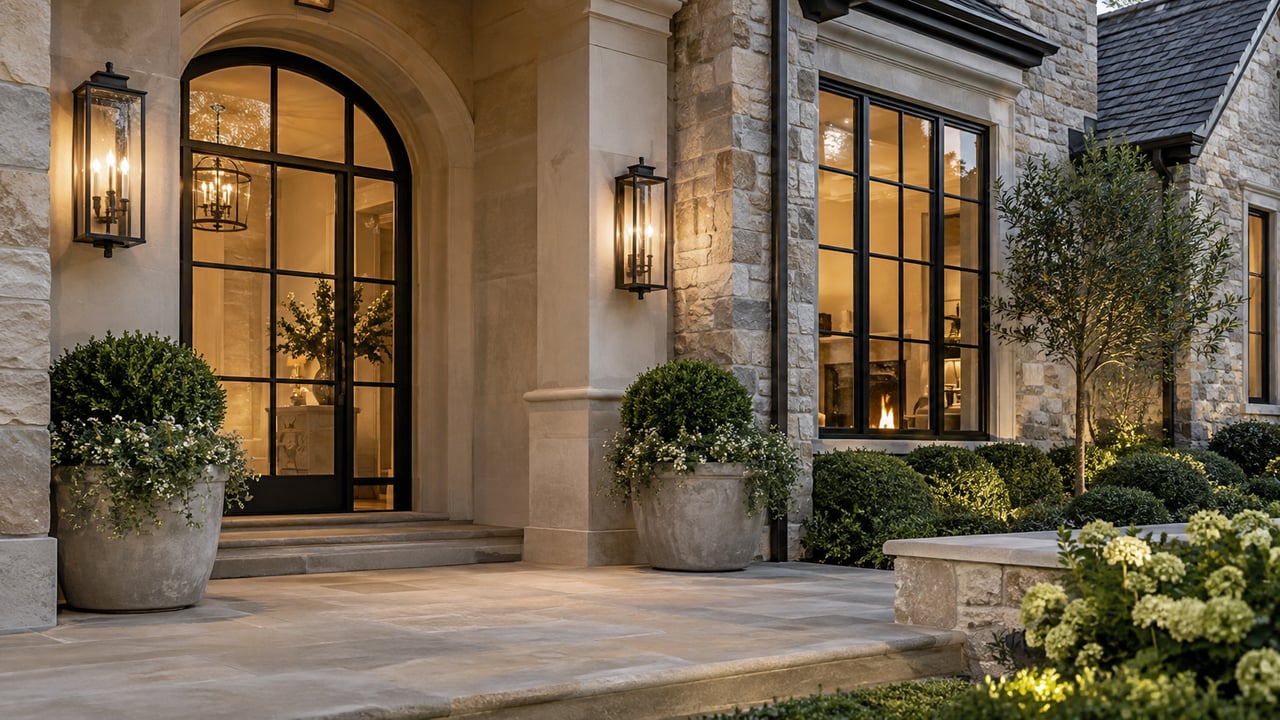
Valuing a distinctive estate property is very different from pricing a conventional home.
In communities surrounding Hunting Valley, Gates Mills, Novelty and the eastern Cleveland luxury corridor, two homes with similar square footage can have dramatically different values. Acreage, privacy, architecture, renovations, outdoor living, additional parcels, pool houses, specialty spaces and the overall quality of the setting can matter as much as bedroom count or price per square foot.
This is also where automated valuations and broad comparable sale searches can fall short. An algorithm can recognize square footage and lot size. It cannot always understand why one property would be extremely difficult for a buyer to recreate today.
Mark and Denise Zervos of The Luxury Home Experts at Platinum Real Estate have spent decades representing distinctive and luxury properties throughout Northeast Ohio. When evaluating an estate, the objective is not simply to find the closest recent sale. It is to understand the property as a whole, identify the buyers most likely to value it and determine what alternatives those buyers can purchase in the current market.
Why Are Hunting Valley-Area Estates More Difficult to Value?
Traditional residential valuation often begins with nearby sales of similar homes. That works well when houses within a neighborhood are relatively comparable.
Estate properties are different.
One residence may sit on two acres while another has ten. One may have a swimming pool, pool house and extensive outdoor entertaining areas. Another may offer an additional buildable parcel. Some estates have undergone substantial recent renovations, while others require modernization. Architecture, setting, privacy, views, mature landscaping and specialized amenities can create meaningful differences even between properties located only a few minutes apart.
For these homes, price per square foot is useful information, but it should rarely be the entire valuation method.
Buyers Should Consider What It Would Cost to Recreate the Property
One of the most overlooked considerations in luxury real estate is replacement reality.
A buyer may look at an existing estate and initially compare its asking price only with recently closed sales. But certain properties deserve another question:
What would it take to recreate this property today?
That calculation is broader than construction cost alone. A buyer would first need to find comparable land in the desired location. Then there may be site work, architectural design, construction, landscaping, a pool, outdoor entertaining areas, secondary structures, specialty interiors and years of time required for the entire property to mature into the finished environment they are considering today.
In some cases, the land or setting itself may be difficult to duplicate.
That does not mean every luxury home should be priced according to theoretical replacement cost. The market still determines value. But buyers evaluating a distinctive estate should consider both comparable sales and whether a realistic alternative could actually be assembled for a similar overall investment.
That distinction becomes especially important when an existing residence combines acreage, major improvements and amenities that would be expensive and time-consuming to recreate.
7325 Calley Lane: A Good Example of Replacement Reality
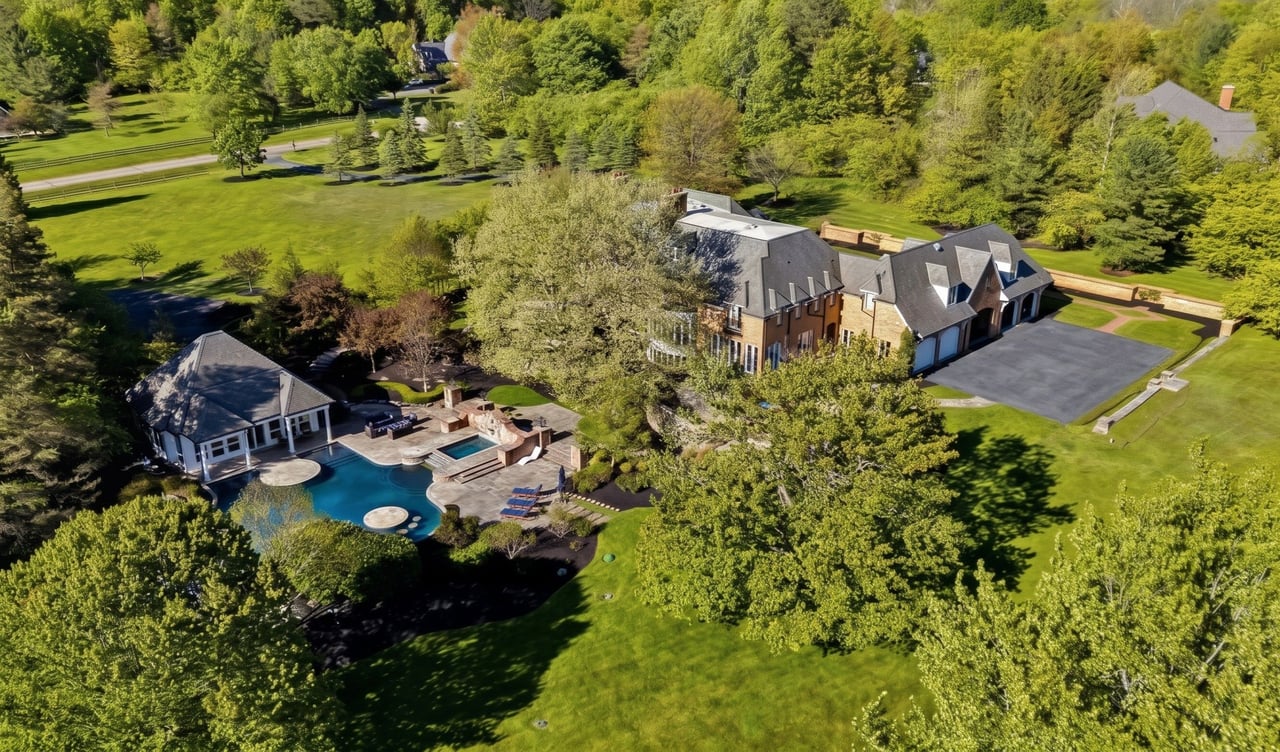
7325 Calley Lane in Novelty, near the Hunting Valley and Gates Mills corridor, illustrates why some luxury properties cannot be evaluated by square footage alone.
The estate combines substantial acreage, an additional buildable parcel, an infinity edge pool, a separate pool house, extensive outdoor living and a residence with multiple specialized lifestyle spaces. The home also includes significant updates and amenities designed around entertaining, recreation and everyday living.
A buyer considering a property like Calley Lane should certainly examine recent comparable sales. But there is another question worth asking: if you started with vacant land today, could you reproduce the complete property, setting and amenities for the same total investment?
Often, that answer is far less obvious than a simple comparison of asking price to price per square foot.
For sophisticated luxury buyers, the value equation is not only what another house sold for. It is also what the available alternatives actually provide.
How Much Does Acreage Affect the Value of an Estate?
Acreage can be extremely important, but acreage should not be valued uniformly.
The usefulness of the land matters. Privacy, road frontage, topography, wooded areas, open lawn, views, access and possible development potential can all influence how buyers perceive additional acreage.
Five acres attached to a luxury residence may contribute differently to value than a separately buildable parcel with its own potential future use.
This is why simply dividing the sale price by total acreage rarely provides a meaningful answer.
For some buyers, additional land is valuable because it protects privacy. For others, it creates opportunities for future construction, recreation or additional residential use, subject to applicable zoning and governmental approvals.
Does an Additional Buildable Parcel Increase Value?
Potentially, yes, and sometimes materially.
A separately buildable parcel may offer the buyer choices that are not available with a conventional estate. Depending on zoning and other requirements, that land could potentially be held for privacy, developed in the future or sold separately.
However, potential should always be verified. Parcel status, zoning, utilities, frontage, access and current governmental requirements should be reviewed before assigning a specific value to development potential.
For sellers, the key is making sure buyers understand that an additional parcel may represent a separate asset rather than simply “more acreage.”
How Much Value Does a Pool Add to a Luxury Home?
At the luxury level, the answer depends heavily on the pool and how it relates to the property.
A basic pool is different from a complete outdoor living environment. An infinity edge pool, professionally designed terrace, pool house, outdoor kitchen, entertaining areas and landscaping can create a lifestyle experience that affects the way a buyer perceives the entire estate.
The same principle applies to the cost of duplication.
A buyer considering a finished estate with a sophisticated aquatic and outdoor entertaining environment should compare that purchase not only with homes lacking those amenities, but with the cost, time and disruption involved in adding them elsewhere.
What About a Pool House, Guest House or Secondary Structure?
Secondary structures can add significant usefulness to an estate, but their value depends on quality, function and integration with the primary residence.
A pool house that expands entertaining and outdoor living may be particularly valuable to one buyer. A guest residence, carriage house or separate living space may appeal to another buyer seeking flexibility for visitors or multigenerational use.
Again, the important question is not simply how many additional square feet exist. It is what those spaces allow the owner to do.
Do Renovations Add Dollar-for-Dollar Value?
Usually not dollar for dollar, but thoughtful renovations can substantially influence both value and marketability.
Luxury buyers frequently compare two different costs: the price of the property and the cost of making it what they want.
A beautifully updated estate may therefore compete very differently from a similarly sized residence requiring extensive renovation. Buyers may place a premium on avoiding years of construction, design decisions and disruption.
This is particularly relevant in larger homes, where replacing kitchens, baths, flooring, mechanical systems and architectural finishes can represent a substantial additional investment.
Why First-Floor Living Matters in the Luxury Market
Main level primary suites and well designed first floor living have become increasingly important in the estate market.
Buyers may want a substantial residence without needing to rely on multiple levels for everyday living. A first floor primary suite, main level office, laundry and generous living spaces can broaden the appeal of a luxury property while still allowing additional bedrooms and recreational areas elsewhere in the home.
The strongest estate properties often combine scale with livability.
Should a Hunting Valley Estate Be Compared Only With Hunting Valley Sales?
Not necessarily.
A buyer searching for a multimillion dollar estate in Hunting Valley may also be evaluating properties in Gates Mills, Novelty, Moreland Hills, Chagrin Falls, Pepper Pike, Waite Hill or other nearby luxury markets.
That means the competitive set can extend beyond municipal boundaries.
A seller should understand both the immediate neighborhood and the broader pool of homes competing for the same buyer.
This is one reason luxury pricing requires judgment. Geographic proximity matters, but buyer behavior matters too.
A distinctive Novelty estate near Hunting Valley may compete more directly with an estate several miles away than with a conventional home located just down the road.
Why Online Home Estimates Often Struggle With Estate Properties
Automated home value tools are built primarily around measurable data such as square footage, bedrooms, bathrooms, lot size and nearby sales.
Those data points are useful, but luxury estate value can depend heavily on characteristics that are difficult for an algorithm to quantify.
Privacy is difficult to measure. The quality of a pool environment is difficult to measure. Architectural detailing, views, mature landscaping and the usefulness of an additional parcel are difficult to reduce to a single database field.
Most importantly, an automated valuation cannot walk a property and understand the complete experience a buyer encounters when they arrive.
For conventional homes, automated estimates can provide an interesting reference point. For distinctive estates, they should rarely be the final answer.
Current Competition Matters as Much as Recent Sales
Recent closed sales tell us what buyers have paid. Current listings tell us what today’s buyer can choose instead. Both matter. If several attractive estates are competing within the same price range, sellers need to understand how their property compares. If there is little available that offers a similar combination of acreage, condition, privacy and amenities, that scarcity can also affect positioning.
This is where the concept of replacement reality becomes especially important.
A buyer does not purchase a spreadsheet of comparable sales. A buyer chooses among the properties actually available to them.
Recognizing a Rare Buying Opportunity
The same characteristics that make an estate difficult to value can also make it unusually difficult to replace. Buyers comparing luxury properties should look beyond square footage and recent sales and consider the complete combination of land, location, improvements, amenities and current alternatives.
Sometimes the most important question is not simply, “Is this home priced correctly?” It is, “What else can I actually buy that gives me all of this?”
Our guide to How to Spot a Rare Buying Opportunity Near Hunting Valley takes a buyer-focused look at how to recognize properties where acreage, amenities, setting and replacement difficulty may create value that is not obvious from a simple price-per-square-foot comparison.
Then continue directly into:
A Rare Property Should Not Be Marketed Like an Ordinary House
Distinctive estates require more than exposure.
They require explanation.
Buyers need to understand why the land matters, why the location matters, why the additional parcel matters and what has been invested in the property. Photography and video should communicate scale and setting. Floor plans should help buyers understand how the residence functions. Digital marketing should reach beyond the immediate neighborhood because the eventual buyer may not currently live nearby. The goal is not simply to show the house.
The goal is to communicate why the property would be difficult to replace.
What Should Estate Owners Do Before Choosing a List Price?
Start with a property specific evaluation rather than an automated estimate.
The analysis should include recent comparable sales, current luxury competition, acreage, improvements, additional parcels, condition, architecture, amenities and the property's probable buyer profile. Then look at the market through the buyer’s eyes.
What else can someone purchase for the same money?
What would they have to spend to reproduce what already exists?
How much time would duplication require?
And are there aspects of the property or setting that may simply not be readily available elsewhere?
Those questions frequently reveal more about luxury value than price per square foot alone.
Considering Selling a Hunting Valley-Area Estate?
Mark and Denise Zervos can prepare a confidential property-specific evaluation that considers the residence, land, improvements, current competition and the buyers most likely to value what makes the property distinctive.
Our Notable Sales provide a look at the range of distinctive and luxury properties represented by The Luxury Home Experts.
The Luxury Home Experts’ Perspective
Luxury real estate is not simply a higher price category. The properties themselves are often more complicated, and the buyer pool evaluates them differently.
Acreage, privacy, an additional parcel, a pool house, an exceptional outdoor environment or extensive renovations may not fit neatly into an automated valuation model. Yet those characteristics can be precisely what causes the right buyer to recognize value.
For certain properties, buyers also need to understand that the alternative is not necessarily another house down the street. The alternative may be purchasing land, designing a home, building it, installing the pool, creating the outdoor living areas, constructing secondary spaces and waiting years for the landscaping and setting to mature. That is why a distinctive estate should be evaluated not only by what has sold, but also by what it would realistically take to replace what is already there.
Mark and Denise Zervos bring decades of real estate experience to the valuation, positioning and marketing of distinctive homes throughout Northeast Ohio. Their approach combines market evidence with an understanding of the property itself, the competitive landscape and the buyer most likely to recognize its value.
Mark & Denise Zervos
The Luxury Home Experts at Platinum Real Estate
216-990-2100 | 239-264-1100
Global Reach. Local Roots.
Frequently Asked Questions About Hunting Valley-Area Estate Values
What is my Hunting Valley home worth in 2026?
The value of a Hunting Valley-area estate depends on far more than square footage. Acreage, location, condition, architecture, privacy, renovations, pools, secondary structures, additional parcels and current luxury competition can all materially influence value.
Is price per square foot useful for luxury homes?
It can be a useful reference, but it should not normally be used by itself. Two estates with similar square footage may offer completely different land, amenities, condition and settings.
Does more acreage always mean a higher value?
Not necessarily. The quality and usefulness of the acreage matter. Topography, privacy, frontage, zoning, development potential and how the land relates to the residence all affect value.
Is an additional buildable parcel valuable?
It can be. A separate buildable parcel may create future options or preserve privacy, but its status and development potential should be verified before a specific value is assigned.
Should buyers consider replacement cost when evaluating a luxury estate?
Yes, as one part of the analysis. Market value is ultimately determined by buyers and sellers, but understanding what it would cost and how long it would take to recreate the land, residence, pool, landscaping and specialty improvements can provide important context.
Can a luxury home be worth more than comparable sales suggest?
Potentially. Comparable sales remain important, but a property with rare acreage, exceptional improvements or amenities that are difficult to reproduce may compete differently from more conventional homes.
Why are online estimates less reliable for estate homes?
Automated models can evaluate measurable characteristics, but they may have difficulty assigning value to privacy, architecture, views, additional parcels, specialty amenities and the overall experience of a distinctive property.
Should Novelty homes be compared with Hunting Valley homes?
Sometimes. For distinctive luxury properties, the most relevant competition may cross municipal boundaries. Buyers considering Hunting Valley may also evaluate Gates Mills, Novelty, Moreland Hills, Chagrin Falls, Pepper Pike and other eastern luxury markets.
How should I determine the right asking price for an estate?
A property specific analysis should consider recent sales, current competition, acreage, condition, amenities, improvement quality and what alternatives are currently available to the likely buyer.